
This is a free preview of our Parents Portal. A membership is required to read the full resources.
$24.99/month or $199/year · No contracts · Cancel anytime

College softball recruiting resources for families
You are not a spectator in this process. You are not the manager of it. You are something more specific and more important — the adult who sees the financial reality clearly, who reads the room on a campus visit when your athlete is too excited to notice something worth noticing, who holds the long view when the process gets hard and they need someone steady.
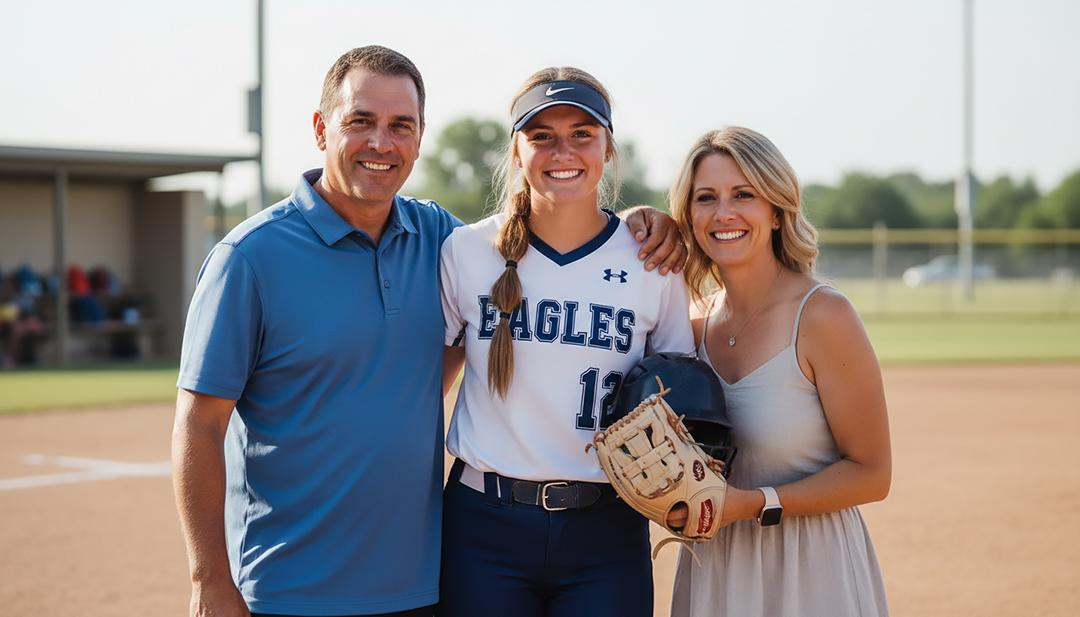
That role, done well, is one of the most valuable contributions anyone makes in the recruiting process. Done poorly — or confused with a different role — it's one of the most common reasons capable athletes end up at the wrong school, or arrive at college without the independence college life demands.
Everything in this portal was written specifically for parents — not adapted from athlete content, but written for the unique perspective, responsibilities, and genuinely difficult moments that belong specifically to you. The Parents Portal is included with every membership and it serves every stop of the AthletesGoing2College Recruiting Blueprint, from the first lesson to the day an offer gets signed.
The core resources
College Recruiting Glossary of Terms→
Equivalency scholarships, the athletics financial aid agreement, dead period, contact period, evaluation period — the recruiting process runs on specific language. This glossary defines the terms that appear in every conversation, compliance discussion, and offer negotiation, including retired terms like the NLI that coaches and parents still say out of habit.
Why College Sports Are Worth Pursuing→
The deeper answer about what four years of college competition actually produces in a person. Honest about the demands, genuine about the rewards — it makes the process feel more grounded when it gets difficult.
Are You Ready to Start Recruiting?→
A diagnostic. The questions your family needs to answer before the first email, the first showcase fee, the first coach contact. If your athlete is a freshman or sophomore, this is the right place to start.
The College Recruiting Timeline→
The structure mapped year by year: what needs to happen and when, the family's role at each stage, and the timing mistakes that cost athletes real opportunities. Revisit at the start of each year.
Understanding Scholarships & Financial Aid→
Where families make the most expensive mistakes. What scholarship numbers mean by division, how athletic and academic aid interact, the net-cost calculation, and how to evaluate a package. Read it before any offers arrive.
The Parent's Recruiting Checklist→
The responsibilities that belong to you — not your athlete, their travel coach, or the college coach. What parents should do at each stage, the common mistakes, and the checklist that keeps the family side organized.
How to Support Without Taking Over→
The page most parents need most and read least. The line between support and takeover is real, it matters to how coaches perceive your athlete, and it's crossed more often than most parents realize. A practical framework for staying on the right side of it.
Pages built for what parents actually face
Added because the questions they address kept coming up — in the stories of families who got things right and families who got things wrong.
What Your Athlete Is NOT Telling You→
They say they're fine. Some of that is true, some is what they think you need to hear, and some they haven't found words for. This names what most athletes carry — the fear, the weight of the investment, the comparison culture, the pressure of a consequential decision at 16 or 17.
Recruiting Safety & Scam Awareness→
What legitimate coach contact looks like, and the five things that should stop you — including the one that matters most: no legitimate recruiting conversation ever requires a minor to keep it from their parents.
Red Flags to Watch For in Programs→
Your athlete evaluates the program; you evaluate everything else. The red flags parents are uniquely positioned to see — in how staffs communicate, how players carry themselves, how offers are structured, and the culture signals that get missed when you're excited.
A Parent's Guide to Campus Visits→
The highest-stakes evaluation opportunity in recruiting. How official and unofficial visits differ, what to observe, which questions belong to you and how to ask them without taking over, and how to debrief afterward in a way that helps rather than distorts.
Understanding NIL for Softball Families→
A plain-English guide: what NIL actually is, what changed with the House settlement, what it means at each division level for softball, what families can and can't do, and how to weigh it as one factor without letting it drive the decision.
Questions Only Parents Should Ask→
The questions that belong to you — scholarship renewal conditions, staff stability, injury protocols, institutional financial health, athlete graduation rates, and the financial aid office's honest cost picture. Organized by category for reference before any visit.
The part most platforms skip
The recruiting process is one of the most sustained periods of evaluation, uncertainty, and emotional pressure a young person can experience — performing, communicating professionally, managing expectations, and navigating a consequential decision, simultaneously, over years. Most platforms don't address this; the checklists and templates don't address this.
This resource covers what normal recruiting stress looks like versus the signs that something needs more attention — burnout, comparison culture, identity pressure — how to open conversations with your athlete about how they're really doing, and specific resources, including crisis support and professional referrals, for situations beyond what a parent conversation can address.
If you are worried about your athlete's immediate safety, don't wait for a membership or a resource page. In the US, call or text 988 to reach the Suicide & Crisis Lifeline, 24 hours a day. If there is immediate danger, call 911.
How to use this portal — based on where you are
If your athlete is a freshman or sophomore
Start with the College Recruiting Timeline and Are You Ready to Start Recruiting? — know where you are before making significant investments of time or money. The free readiness assessment will score that for you in about three minutes, no card required. Then read What Your Athlete Is NOT Telling You; the earlier you understand the emotional landscape, the better.
If your athlete is a junior in active recruiting
The financial pages are urgent. Read Understanding Scholarships & Financial Aid and NIL for Softball Families before any offer conversations. Questions Only Parents Should Ask should be in your hand before every visit; Red Flags should be in your head during every visit.
If your athlete is a senior approaching commitment
A Parent's Guide to Campus Visits and How to Support Without Taking Over are the priority reading — this is where parent influence is most consequential. Use the Before You Sign checklist in Making Your Commitment alongside these pages.
If something feels off
Go directly to Mental Health & Wellbeing. Read it, share the relevant parts with your athlete if that feels right, and use the resources there if what you're observing goes beyond what this process normally produces. If it's urgent tonight, 988 is above.
If you're not sure where to start
Read What Your Athlete Is NOT Telling You. It's the most honest page in this portal, and it will tell you more about your athlete's experience of this process than anything else here.
The process will test your patience, your objectivity, and your ability to hold hope and realism in the same hand at the same time. Through all of it, the most important variable in your athlete's recruiting experience isn't the showcase they attend, the email they send, or the profile they build — it's whether they feel seen and supported by you, not for their performance or the outcome, but for who they are as a person navigating something genuinely hard.
That's not a soft observation; it's the practical foundation of everything else. Athletes who carry the confidence of unconditional parental support make better decisions, communicate more authentically with coaches, and arrive on campus with a healthier foundation than athletes whose sense of their parents' love is threaded through the outcome of a scholarship offer.
The full Parents Portal is included with every membership.
Along with the recruiting education, the Profile Builder, the College Search Dashboard, the Contact Tracker, the outreach templates, and the College Cost Comparison Tool — the whole AthletesGoing2College Recruiting Blueprint, at one price.
$24.99/month or $199/year · No contracts · Cancel anytime · The assessment is free and asks for no card
Already a member? Go to your dashboard →
ATHLETESGOING2COLLEGE
STAND OUT | GET NOTICED | GET RECRUITED
The step-by-step college softball recruiting system — six stops from learning how recruiting works to signing with a program that fits. Your athlete runs it, under their own name.
Start the Blueprint — $199/yr →$24.99/month or $199/year · No contracts · Cancel anytime
Recruiting rules change and vary by division. Always confirm current rules with the governing body: NCAA.org · NAIA.org · NJCAA.org