 Step 7 · Offers & Commit
After the Commitment
How to finish strong and arrive ready
The commitment is the finish line the recruiting process was running toward. It is not the finish line for everything else — the six to nine months before campus are the preparation period for what comes next, and how your athlete uses them shapes how the first year begins.
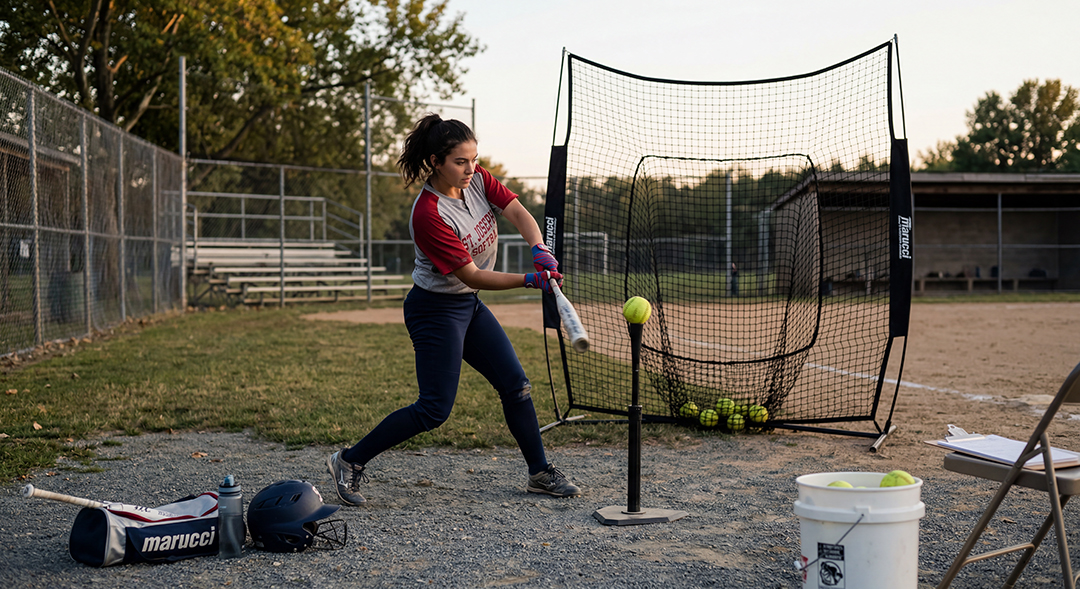
The period between signing the financial aid agreement and walking onto a college campus for the first time is six to nine months for most athletes. Some treat it as an extended celebration; others treat it as genuine preparation — using every month to close the gap between who they are now and who they need to be when they arrive.
The athletes who arrive already understanding the difference between high school and college athletics, already conditioned for what the first week of practice asks, already possessing the life skills college immediately demands — those athletes have a different first year than the ones surprised by all of it. This page is about being the prepared athlete — not by overcomplicating these months, but by using them deliberately.
Finishing the recruiting process professionally
One of the clearest tests of character in the whole journey — and how she handles it follows her into the softball community she’s about to join.
Notify every coach who was in genuine contact
Every coach who extended an offer, hosted a visit, or invested real time deserves a brief, personal closing conversation — by phone when the relationship warrants it. Honest, gracious, clear: she’s decided, she’s grateful, she respects the program. She needn’t explain in detail why she chose elsewhere. If a coach is disappointed, she hears it without defensiveness and closes graciously — but she needn’t accept an extended argument about why her decision was wrong.
Update the Contact Tracker one final time
Mark the chosen school committed and the others closed, with notes capturing the final disposition of each relationship. Housekeeping — but also a record of the process she managed, the relationships she built, and the decision she made.
Thank the people who were part of it
The travel coach who wrote the scouting report, the high school coach who recommended her, the instructor who built the velocity or swing, the parents who drove to every showcase, the teammates who gave honest feedback. Individual, specific acknowledgments — not a group post. Seeing and naming contributions is a character habit that matters in a college locker room.
The senior year that deserves to be finished well
A signed agreement doesn’t make the rest of senior year irrelevant — it makes it the period during which she proves the commitment was deserved.
Academic standards don’t relax after signing
Scholarship offers can be withdrawn for significant academic failure in senior year — typically when second-semester performance drops so far that the institution’s admission requirements are no longer met. Most departments flag a concern first, but sustaining the academic profile that made her recruitable is an obligation of the commitment. And the habits she builds now are the ones she carries into a far more demanding college classroom — an athlete who coasts arrives with the habits of someone who coasts.
High school seasons still matter
One of the most common and damaging post-commitment mistakes is a diminished competitive investment. Coaches still watch and report; college staffs sometimes call before she arrives. Beyond reputation, the competitive habits she brings to August practice are built in every game still to be played. Play every remaining game like it matters — because it does, just for different reasons now.
Stay connected to the program
The staff expects to hear from her — not constantly or anxiously, but with the regularity of someone invested and excited. Reach out after major results, send brief spring-season updates, respond promptly, attend pre-enrollment activities. The athlete who stays engaged arrives with a relationship already built; the one who went quiet after signing arrives as a stranger in a jersey.
Get to know the incoming class
Most programs have a group chat, team social presence, or events for committed athletes — use them genuinely. The freshman cohort navigating the same adjustments at the same time is worth knowing before August. A class that enters with relationships already established has a different first year than one meeting at move-in.
Physical preparation
The physical gap between high school and college athletics is consistently underestimated. Athletes who arrive unprepared spend the first month recovering rather than competing.
Understand the demand: the weekly time commitment at D1 runs 30 to 40+ hours in season — practice, conditioning, film, travel, games (lighter at D2/D3 but still well beyond high school; NAIA varies). The preseason weeks just before classes are among the most physically demanding of the year — arriving in the best condition of her life isn’t an overreach, it’s the realistic standard.
A summer training plan — four areas
Sport-specific skills
The skills relevant to her position and development needs — a structured pitching program if velocity is the priority, continued swing work if mechanics are. Not a rebuild from scratch; refine and consolidate what’s already working.
Strength & conditioning
College strength programs are far more structured than most high school ones. A simple program done consistently three or four times a week across the summer makes her adapt faster than one who’s never trained systematically.
Cardiovascular conditioning
College softball’s travel and intensity require a cardio base built through consistent training, not available on demand. Running — steady-state, intervals, or position-specific — across the summer means arriving ready rather than building the base through fall practice itself.
Recovery & body maintenance
The sleep, nutrition, and recovery habits that sustain high intensity across a long season need to be established before they’re needed, not discovered under duress. In college athletics these aren’t luxuries — they’re infrastructure.
Ask the staff what they expect. Before building the plan, ask the recruiting coach directly: “What does the incoming class typically need to be ready for, and is there anything specific you’d recommend I work on this summer?” Many programs provide a summer conditioning program — use it. They’ve watched athletes arrive underprepared; ask them what ready means.
The physical-readiness conversation worth having
College athletics is an intense physical stress on developing bodies. Athletes with a significant injury history — especially one managed in high school with accommodations that may not transfer — owe it to themselves and the program to have an honest conversation about their physical status before arriving, ideally in the spring of senior year. The medical staff at most D1/D2 programs is sophisticated and supportive; what they aren’t is surprised by an undisclosed injury history discovered when the athlete can’t participate in preseason.
Life skills preparation
College is the first time most athletes are fully responsible for their own daily existence — schedule, laundry, nutrition, finances, social life, medical, mental health. This transition surprises athletes most because it’s talked about least.
Time management — the foundational skill
More freedom and more obligation at once than anything she’s experienced. Athletics takes 20–30 hours in season; a full course load another 15–20; sleep 7–8 a night. The math leaves little margin. Build now: manage her own calendar deliberately, without being asked — working backward from deadlines and using the thirty-minute windows.
Nutrition — fueling performance
A dining hall isn’t a performance-nutrition environment by default. Athletes who know how to build a meal that supports training, eat enough to fuel it, and hydrate consistently don’t lose conditioning to poor habits in season. Build now: being intentional about what she eats and why — not obsessively, intentionally.
Sleep — the undervalued variable
The research isn’t ambiguous: insufficient sleep slows reaction time, recovery, and decision-making and raises injury risk. The college environment fights consistent rest by default. Build now: treat sleep as a performance variable — consistent bedtimes, protect the eight hours, the alarm is non-negotiable. Easier to build in senior year than in the freedom of first semester.
Financial management
For many, college is the first time managing their own money across a multi-month horizon. Build now: know what money is available, what it must cover for the semester, and have a plan for unanticipated expenses. If the family hasn’t had specific conversations about what the scholarship covers, what the family provides, and what she manages — have them before August.
Mental health awareness
The competitive, physical, academic, and social demands — plus distance from family and a rebuilt identity — create a real burden many college athletes experience at clinically relevant levels. Not a statement about weakness; about what the transition demands. Build now: know the athletic-department and campus counseling resources, know her own signals of stress and what has helped before, and know that asking for help is the self-awareness that makes the environment manageable. A readiness conversation, not a crisis one.
Social identity beyond softball
An athlete defined entirely by her sport is fragile in ways the broader person isn’t — a bad game or a staff conflict hits harder. Build now: develop interests, friendships with non-athletes, and campus engagement beyond the athletic complex — not instead of softball, alongside it. That breadth is the foundation of four-year resilience.
Arriving on campus
The logistics are specific to each school. What applies universally is the attitude with which they’re approached.
Arrive with a learner’s posture, not an expert’s
She’s been the best player on most teams, recruited, evaluated, chosen — all real, all behind her. On the first day of college practice, everyone there was the best on their team, everyone was recruited. The landscape has recalibrated entirely. The athlete who arrives ready to earn everything rather than collect what recruiting implied she’d earned is the one most likely to thrive. Arrive ready to be a freshman — not humbled into passivity, but actively committed to learning and competing.
The first weeks are an impression, not a performance
The impressions formed in the first fall practices — work ethic, coachability, response to correction, attitude in hard moments, energy and investment — are lasting, and they form before any track record exists, which gives them disproportionate weight. Show up as the kind of person worth investing in: not perfectly, but with genuine effort, engagement, and willingness to be a freshman in a program about to ask a great deal.
What to do when it’s hard
It will be hard — not might be, will be — for virtually every athlete regardless of preparation. The practice is more intense, the competition closer, the body working harder than ever. That’s normal, expected, universal — the environment doing what a high-performance environment does, not a signal something’s wrong. What to do: tell the truth about it — to a teammate, a family member, the athletic department’s mental health resources if it persists and grows — rather than performing okayness. And then keep going. The athlete struggling at week three isn’t who she’ll be at week ten; the adjustment takes time, and the time produces something that wasn’t there before. Good preparation doesn’t eliminate the hard part — it makes it shorter and the recovery faster.
The end that is also a beginning
The commitment was the end of the recruiting process, and this page is the end of the seven-step journey — from “how does recruiting work?” to “I’m ready to walk onto a college campus and compete.” But the end of the seven steps is the beginning of four years that will shape who she becomes well beyond softball. Use the months between the commitment and the first day deliberately: close the recruiting relationships professionally, finish the academic year with integrity, prepare her body, build the life skills the environment will demand, and arrive ready to learn. That is the whole preparation. It is enough.